Ceramic Lined Pipes and Fittings
Wear- and Corrosion-Resistant Ceramic Lined Pipes and Fittings
In industrial fluid control and conveying systems, abrasive and corrosive media can rapidly damage conventional valves and pipe fittings. Frequent replacement and repair increase maintenance costs, while unplanned shutdowns reduce production efficiency and raise the total cost of operation.
Plinduo supplies ceramic-lined elbows and other fittings for highly corrosive and abrasive service. The outer shell can be carbon steel or stainless steel, with segmented welded elbows or one-piece hot-bent construction selected for the service conditions. The lining can be a monolithic ceramic liner or a mosaic tile system.
Ceramic Lined Fitting Configurations
- Ceramic Lined Straight Pipe
- Ceramic Lined Elbow
- Ceramic Lined Reducer
- Ceramic Lined Tee (Y-Type and T-Type)
- Ceramic Lined Cross
- Ceramic Lined Orifice Plate
- Ceramic Lined Cylinder Sleeve
Typical Industries and Applications
- Mining
- Petrochemical Processing
- Slag and Ash Removal
- Pulp and Paper
- Metal Smelting
- Conveying abrasive gas-solid and liquid-solid mixtures
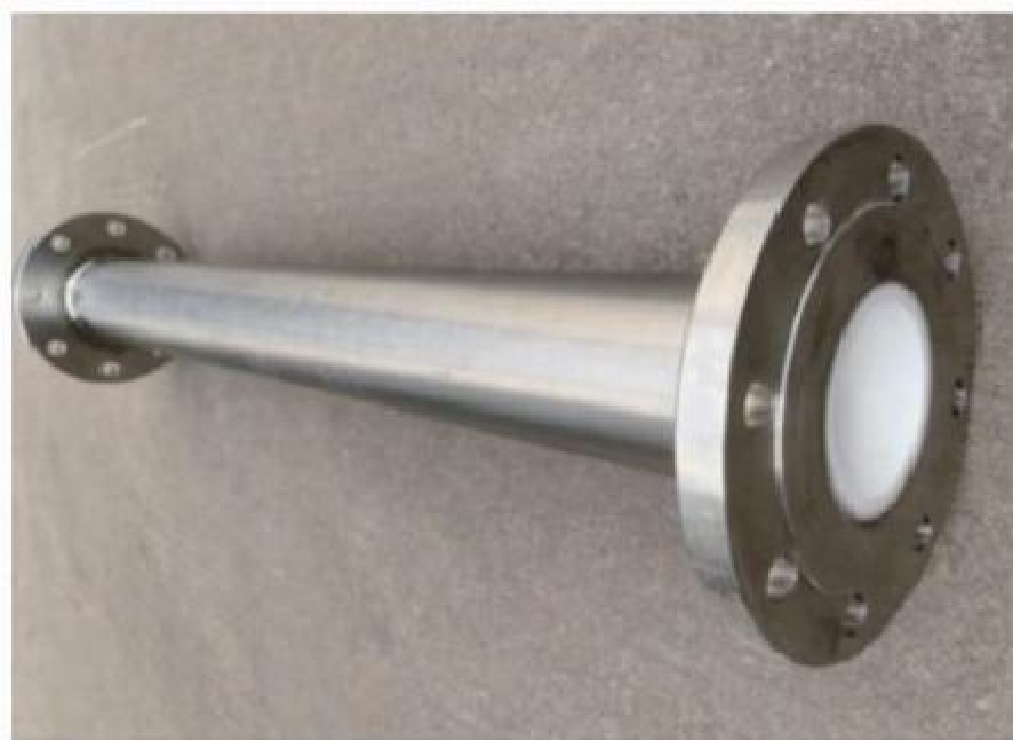
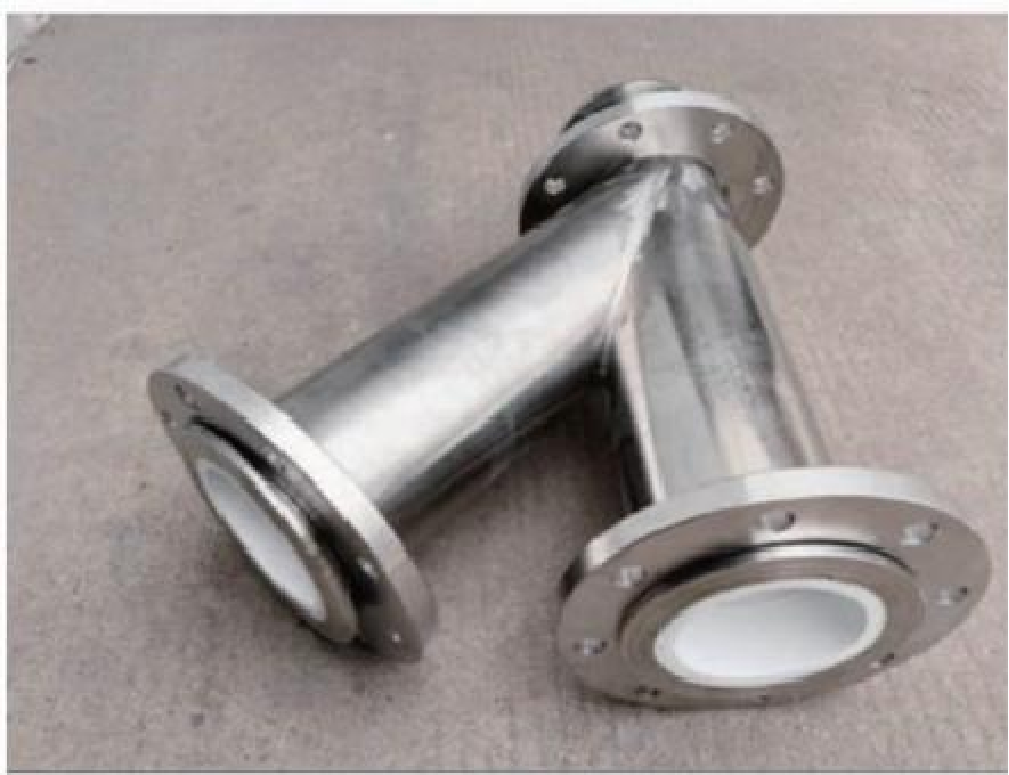
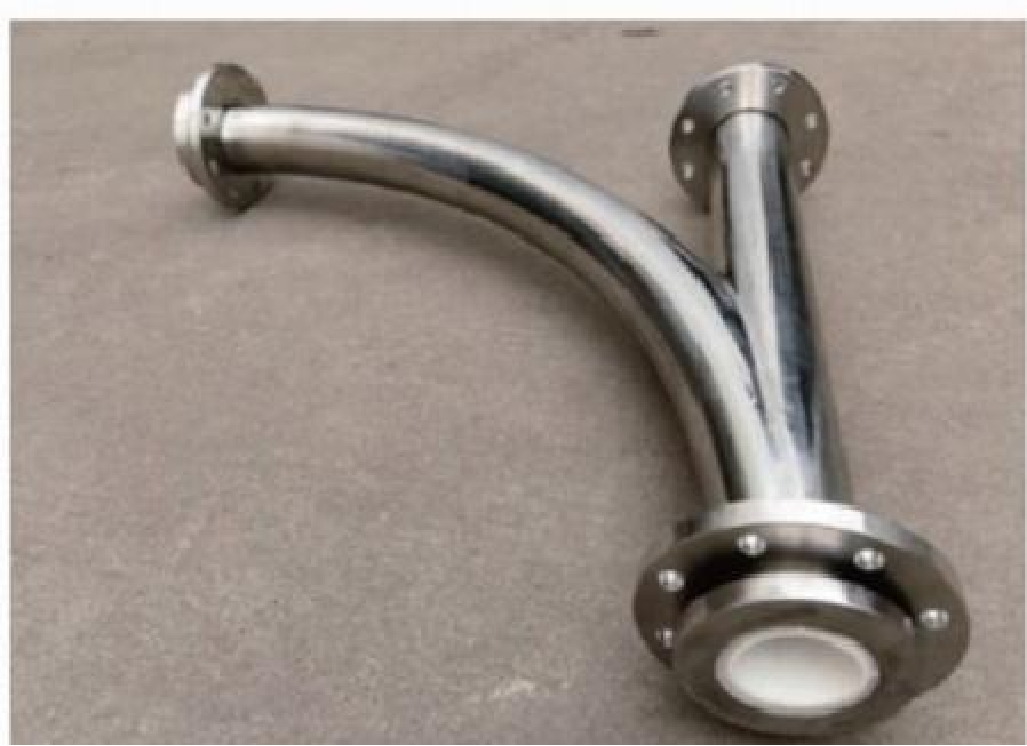
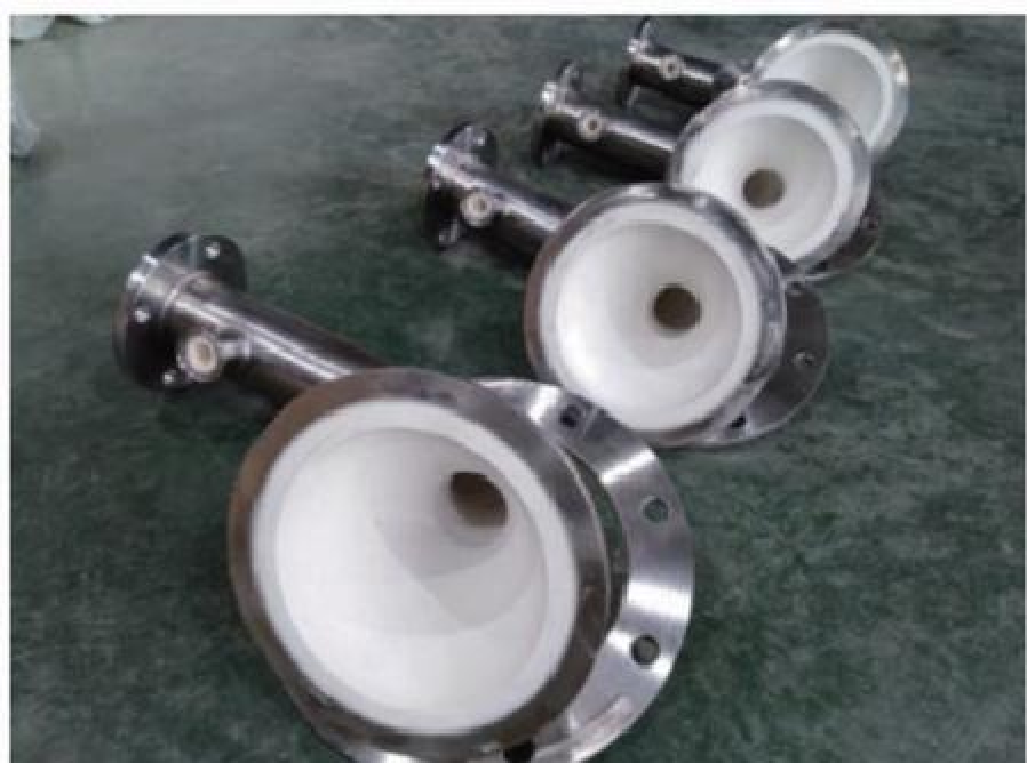
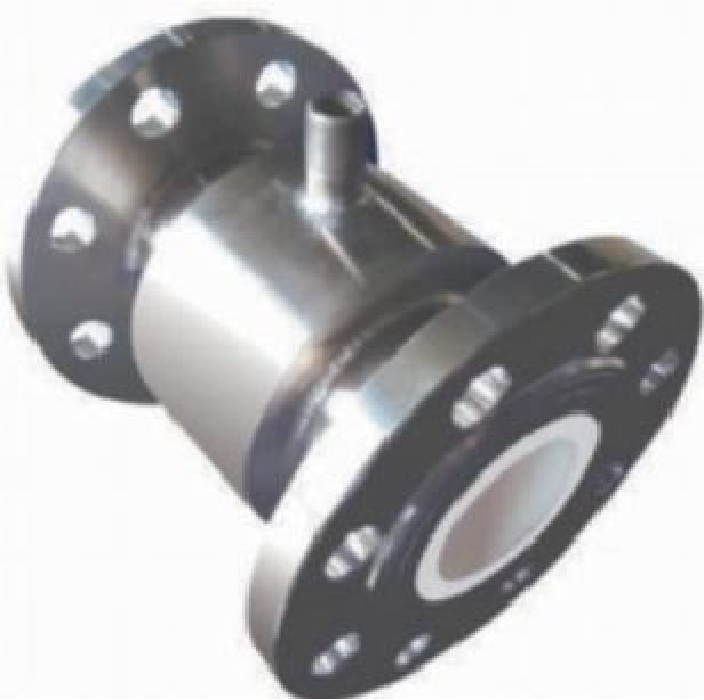
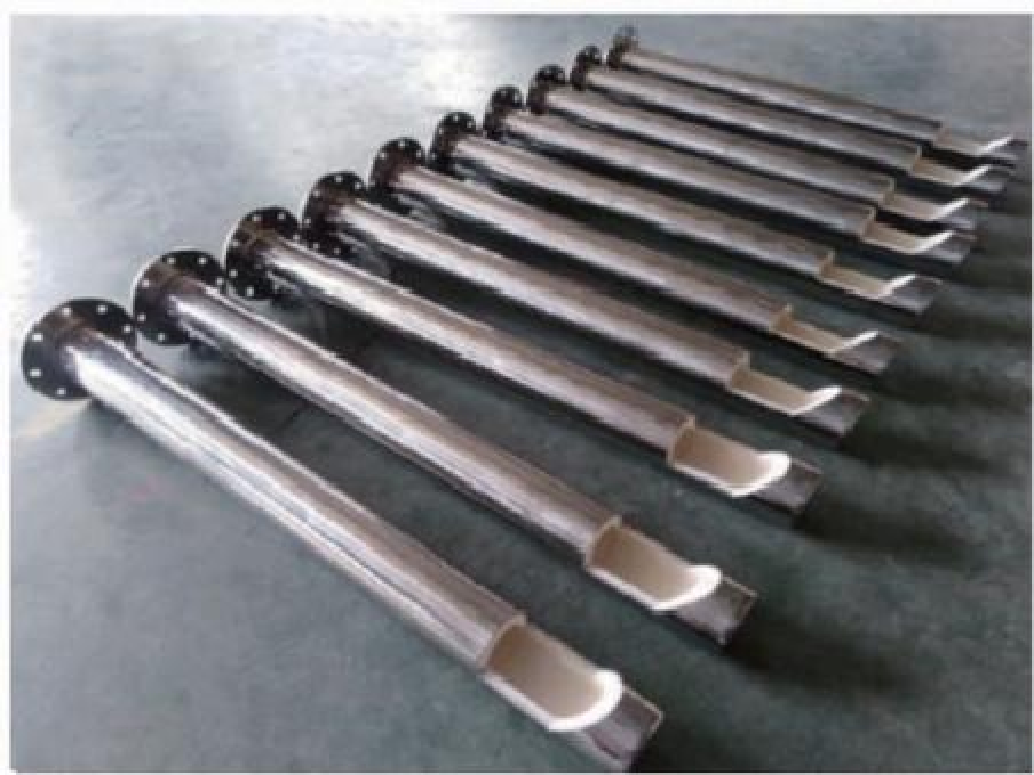
Monolithic Ceramic Lined Pipe Construction
- Steel Pipe Shell:Stainless steel or carbon steel pipe can be specified. Elbows are formed by one-piece hot bending for a smooth internal flow path, clean appearance and higher pressure capability.
- Adhesive Filler Layer:A ceramic-grade epoxy adhesive provides high shear strength, good workability and strong bonding. Adhesive grades for 150°C, 250°C or 350°C service can be selected; the ceramic adhesive is typically white.
- Ceramic Lining Layer:Common tile sizes include 7.5×17.5 mm, 10×10 mm, 100×50 mm, 100×80 mm, 100×100 mm and 120×80 mm, with thicknesses from 5 to 30 mm. Complex steel geometries can use multiple tile sizes; joints are filled with ceramic adhesive to keep the step at less than 1 mm.
From outside to inside, a monolithic wear-resistant ceramic lined pipe consists of the steel shell, adhesive filler and ceramic layer. The finished ceramic and adhesive faces are flush with the flange sealing face.
Elbow Lining
The ceramic lining is curved to match the elbow radius. Each ceramic segment uses a socket connection; after firing at 700°C, the segments are pre-assembled and then installed as a complete lining inside the steel pipe.
Tile-Lined Ceramic Construction
The tile-lined design combines ceramic tiles, ceramic-grade weld studs, inorganic adhesive and a high-toughness steel backing plate. Stud-welded versions secure the ceramic to steel equipment and use a high-temperature inorganic adhesive for long-term operation without aging or delamination.
Ceramic Material Performance by Grade
| Material Grade | Material | Bulk Density (g/cm³) | Rockwell Hardness (HRA) | Vickers Hardness (HV) | Flexural Strength (MPa) | Compressive Strength (MPa) | Wear Volume (cm³) | Fracture Toughness KIC (MPa·m1/2) | Typical Application |
|---|---|---|---|---|---|---|---|---|---|
| 92 | Standard Alumina Ceramic | ≥3.5 | ≥83 | ≥1000 | 250 | 800 | ≤0.06 | ≥3.2 | Pneumatic powder conveying equipment |
| K92 | Standard Alumina Ceramic | ≥3.7 | ≥85 | ≥1100 | 300 | 1200 | ≤0.03 | ≥3.2 | Pneumatic powder conveying equipment |
| K95 | Fine White Alumina Ceramic | ≥3.8 | ≥85 | ≥1200 | 320 | 1300 | ≤0.03 | ≥3.5 | Pneumatic conveying of highly abrasive powders |
| K95R | Fine Red Alumina Ceramic | ≥3.6 | ≥85 | ≥1000 | 300 | 1500 | ≤0.03 | ≥4.0 | Pneumatic conveying of highly abrasive powders |
| K99 | Ultra Wear-Resistant Alumina Ceramic | ≥3.9 | ≥90 | ≥1500 | 350 | 1500 | ≤0.02 | ≥4.0 | Conveying equipment for larger bulk solids |
| ZYA | Toughened Alumina Ceramic | ≥4.15 | ≥90 | ≥1400 | 450 | 2500 | ≤0.01 | ≥4.5 | High-impact bulk material conveying equipment |
| AEZ | Reinforced Zirconia Ceramic | ≥5.4 | ≥88 | ≥1200 | 800 | 3000 | ≤0.008 | ≥5.0 | High-impact, high-abrasion bulk material conveying equipment |
| ZR | Zirconia Ceramic | ≥6.0 | ≥88 | ≥1200 | 800 | 3000 | ≤0.008 | ≥5.5 | High-impact, high-abrasion bulk material conveying equipment |
Technical Parameters
- Pressure Rating Range:PN10、PN16、PN25、PN40、PN63、PN100、PN160;ANSI Class 150、Class 300、Class 600、Class 900。
- Size Range:DN15–DN400;ANSI 1/2"–16"。
- Design Standards:Flange dimensions: GB/T 9113-2010 and ASME B16.5; fitting dimensions are confirmed to customer requirements.
- Fitting Body Materials:Carbon steel, stainless steel, alloy steel and duplex stainless steel.
- Lining Materials:Alumina ceramic, zirconia ceramic, silicon nitride and silicon carbide.
- Steel Pipe and Flanges:SUS304, SUS316 and Q235; fixed, lap-joint or special flange configurations are available.
- Ceramic Lining Materials:95% alumina (white) or 99% alumina (white or beige). The exterior can be sandblasted, polished or corrosion-protected; feed pipes can receive an ETFE or alumina ceramic coating.
Installation Dimensions
Dimensions for Monolithic Ceramic Lined Straight Pipes, Tees and Feed Pipes
| Steel Pipe OD (mm) | Steel Wall Thickness (mm) | Ceramic ID (mm) | Ceramic Thickness (mm) | Flange Size |
|---|---|---|---|---|
| 48 | 2 | 34 | 3 | DN40 |
| 57 | 2 | 40 | 4.5 | DN40/DN50 |
| 63 | 2 | 48.5 | 4 | DN50 |
| 70 | 3 | 50 | 5 | DN50 |
| 76 | 3 | 50 | 7 | DN65 |
| 76 | 2 | 58 | 5 | DN65 |
| 83 | 3 | 62 | 5 | DN65 |
| 89 | 3 | 65 | 6 | DN65/DN80 |
| 89 | 3 | 68 | 5 | DN80 |
| 89 | 3 | 70 | 5 | DN80 |
| 102 | 3 | 76 | 7 | DN80/DN100 |
| 102 | 3 | 80 | 6 | DN80/DN100 |
| 108 | 4 | 80 | 6 | DN80/DN100 |
| 114 | 3 | 90 | 6 | DN80/DN100 |
| 127 | 4 | 100 | 6 | DN100/DN125 |
| 152 | 3 | 125 | 8 | DN125/DN150 |
| 159 | 4 | 125 | 8 | DN125/DN150 |
| 180 | 3 | 150 | 9 | DN150 |
| 219 | 4 | 180 | 11 | DN200 |
| 245 | 5 | 200 | 13 | DN200/DN250 |
| 245 | 4 | 210 | 10 | DN200/DN250 |
| 299 | 5 | 250 | 13 | DN250 |
| 340 | 3 | 300 | 13 | DN300 |
For ceramic straight pipes with an internal diameter up to 100 mm, custom lengths are available from L=100–3000 mm; for IDs above 100 mm, custom lengths are available from L=100–2000 mm. The steel pipe and ceramic selection for 5-inch ceramic tees and bin feed pipes follows the straight-pipe selection.
Dimensions for Monolithic Ceramic Lined Elbows
| Steel Pipe OD (mm) | Steel Wall Thickness (mm) | Ceramic ID (mm) | Ceramic Thickness (mm) | Flange Size | Bend Radius |
|---|---|---|---|---|---|
| 48 | 2 | 34 | 3 | DN40 | D is the ceramic internal diameter; R=1.5–10D is available to order. R=6D, 8D and 10D are common for pneumatic powder conveying. |
| 57 | 2 | 40 | 4.5 | DN40/DN50 | D is the ceramic internal diameter; R=1.5–10D is available to order. R=6D, 8D and 10D are common for pneumatic powder conveying. |
| 63 | 2 | 48.5 | 4 | DN50 | D is the ceramic internal diameter; R=1.5–10D is available to order. R=6D, 8D and 10D are common for pneumatic powder conveying. |
| 76 | 3 | 50 | 7 | DN65 | D is the ceramic internal diameter; R=1.5–10D is available to order. R=6D, 8D and 10D are common for pneumatic powder conveying. |
| 76 | 2 | 58 | 5 | DN65 | D is the ceramic internal diameter; R=1.5–10D is available to order. R=6D, 8D and 10D are common for pneumatic powder conveying. |
| 83 | 3 | 62 | 5 | DN65 | D is the ceramic internal diameter; R=1.5–10D is available to order. R=6D, 8D and 10D are common for pneumatic powder conveying. |
| 89 | 3 | 65 | 6 | DN65/DN80 | D is the ceramic internal diameter; R=1.5–10D is available to order. R=6D, 8D and 10D are common for pneumatic powder conveying. |
| 89 | 3 | 68 | 5 | DN80 | D is the ceramic internal diameter; R=1.5–10D is available to order. R=6D, 8D and 10D are common for pneumatic powder conveying. |
| 89 | 3 | 70 | 5 | DN80 | D is the ceramic internal diameter; R=1.5–10D is available to order. R=6D, 8D and 10D are common for pneumatic powder conveying. |
| 102 | 3 | 76 | 7 | DN80/DN100 | D is the ceramic internal diameter; R=1.5–10D is available to order. R=6D, 8D and 10D are common for pneumatic powder conveying. |
| 108 | 4 | 80 | 6 | DN80/DN100 | D is the ceramic internal diameter; R=1.5–10D is available to order. R=6D, 8D and 10D are common for pneumatic powder conveying. |
| 114 | 4 | 90 | 6 | DN80/DN100 | D is the ceramic internal diameter; R=1.5–10D is available to order. R=6D, 8D and 10D are common for pneumatic powder conveying. |
| 127 | 4 | 100 | 6 | DN100/DN125 | D is the ceramic internal diameter; R=1.5–10D is available to order. R=6D, 8D and 10D are common for pneumatic powder conveying. |
| 159 | 4 | 125 | 8 | DN125/DN150 | D is the ceramic internal diameter; R=1.5–10D is available to order. R=6D, 8D and 10D are common for pneumatic powder conveying. |
| 180 | 3 | 150 | 9 | DN150 | D is the ceramic internal diameter; R=1.5–10D is available to order. R=6D, 8D and 10D are common for pneumatic powder conveying. |
| 219 | 4 | 180 | 11 | DN200 | D is the ceramic internal diameter; R=1.5–10D is available to order. R=6D, 8D and 10D are common for pneumatic powder conveying. |
| 245 | 5 | 200 | 13 | DN200/DN250 | D is the ceramic internal diameter; R=1.5–10D is available to order. R=6D, 8D and 10D are common for pneumatic powder conveying. |
The elbow radius is selected according to the ceramic ID D. Custom radii from R=1.5–10D are available; R=6D, 8D and 10D are commonly used in pneumatic powder conveying systems.